

Let’s be honest - humans never evolved to be so plugged into all the problems in the world. Our nervous systems just aren’t built for it, so being politically activated (even if it’s important) can take a huge toll on us. In this digital age, our phones and computers have become a portal into every anxiety inducing event happening around the world, most of which we can’t really do anything about ourselves. As a result, many people find themselves emotionally exhausted and overwhelmed, and quickly our political awareness turns into cynicism, burnout, and hopelessness.
Hopeless is just how the ruling class wants us. When we lack hope, we lack the will to fight or show up for others. Things become “just the way they are” that can never be changed (which is far from the truth). In order to be in the fight for the long term, having hope is essential. That can sound silly or naive to some, but hope is the seeds for resistance - a survival strategy etched deep into our biology.
Since the earliest humans walked this earth ~300,000 years ago, hope has propelled us to overcome adversity, build new societies, and dream of better futures. It’s not just wishful thinking; it’s an essential mechanism that has kept our species alive for generations. When we feel hopeful, the brain releases chemicals like dopamine that feeds motivation to take action towards finding solutions and persevering through hardships. In this way, hope is a biological push forward, a nudge from evolution itself to keep going. Countless communities that have faced great adversity have kept hope alive, from Africans experiencing the transatlantic slave trade to Native Americans facing genocide to Palestinians fighting against occupation. All of these communities have held onto a deep hope and belief that even in the face of insurmountable odds, as long as they kept pushing forward together despite the uncertainty, things would improve.
So how do we find balance and keep hope? That answer is different for everyone. But here at the Conscious Citizens, there are a few concepts that we have found helpful to keep the internal light on when everything else feels dark and wanted to share them in case it’ll help you too.
Radical Hope
Optimists will believe things will always get better. Pessimists believe things will always get worse. But having hope is believing things will always change and that what we, and our communities, do matter even if we don’t know what the exact impact will be. This is really exemplified by the life of Plenty Coups, the last great chief of the Crow Nation.
Plenty Coups was born in 1848 and became chief at the age of 28. Throughout his life, he witnessed the collapse of his civilization and nomadic way of living as white colonists relentlessly and violently expanded their territory west. Colonists waged a campaign to exterminate the native buffalo herds that the Crow Nation depended on. Plenty Coups recalled:
"When the buffalo went away the hearts of my people fell to the ground and they could not lift them up again. After this nothing happened.”
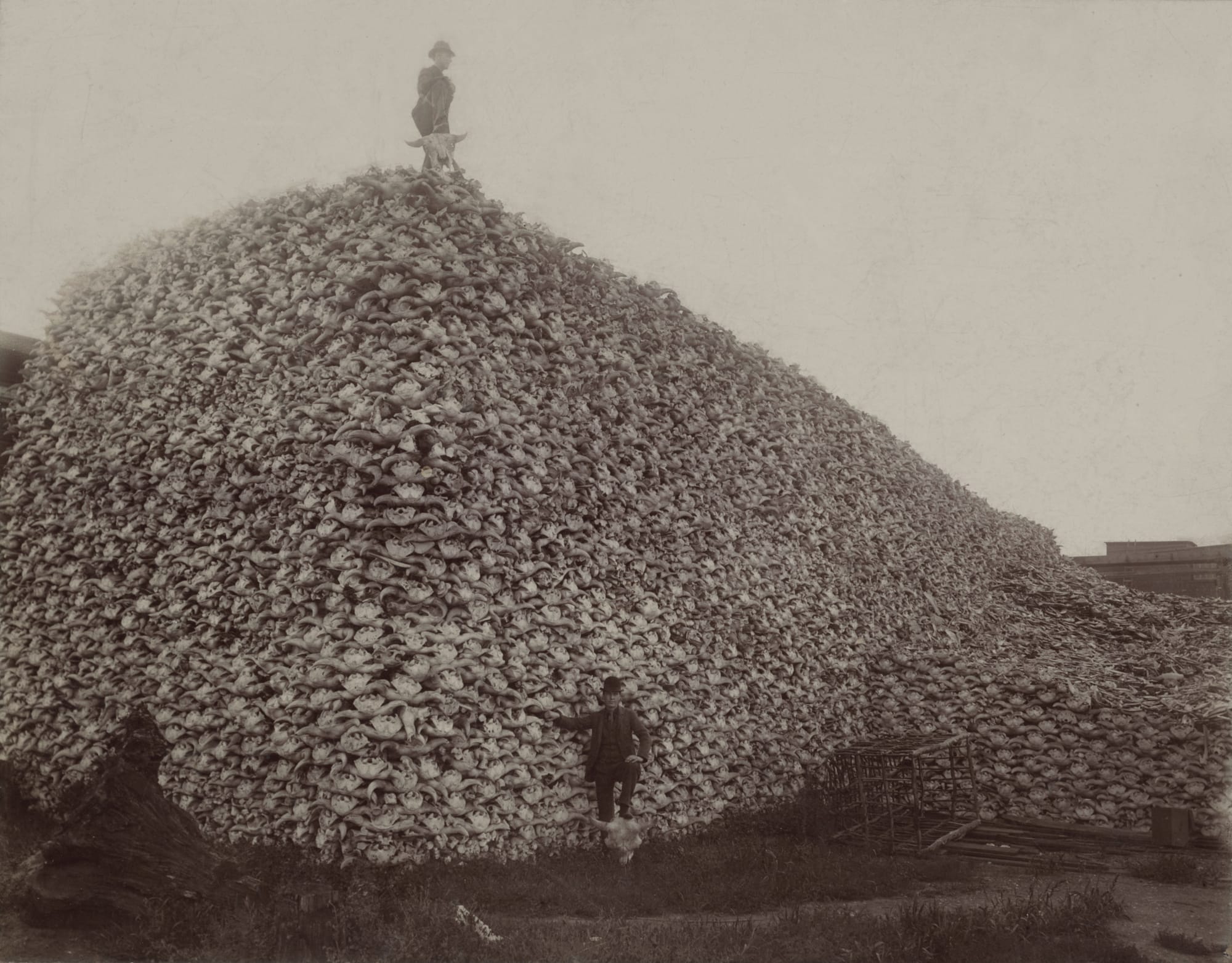
Facing the end of their way of life, Plenty Coups made a controversial decision. He chose to ally with the white colonizers - both because the nearby Sioux and Cheyenne tribes (who were also fighting the colonists) were historical enemies of the Crow, but also because he wanted the Crow’s culture and spiritual beliefs to carry on in some form and felt that cooperation would be better than opposition (as it’d likely result in death). To some, he’s a traitor, to others a pragmatist - whatever your view, it did work. Plenty Coups spent the later years of his life lobbying Washington DC politicians to protect his ancestral lands and was largely successful compared to other Native American tribes. While other tribes were moved to reservations far away from their homelands, the Crow were able to keep roughly 80% of their land.
The philosopher Jonathan Lear writes about Plenty Coups in his book Radical Hope: Ethics in the Face of Cultural Devastation. He uses Plenty Coups’ story to describe the concept of Radical Hope - a unique form of hope that emerges during times of profound adversity and cultural upheaval. It involves envisioning and holding faith in a future that is distinctly different from the present, and constantly working toward it even without a clear path forward. To Lear, what made Plenty Coup’s hope radical, and not foolish, was that he believed in the Crow’s collective ability to figure out a new path forward even if he couldn’t see it himself. Lear writes:
Radical hope anticipates a good for which those who have the hope yet lack the appropriate concepts with which to understand it.
We love this concept because we are also facing massive challenges that threaten our way of life–the rise of fascism caused by isolation, economic instability and social unrest; the climate crisis caused by man-made disasters, resource shortages, epidemics/pandemics; economic distress caused by widespread unemployment, national debt, and hyper inflation; traditional, nuclear, and cyber warfare–caused by the grip of the capitalist class on global society - and it’s all coming to a head in our lifetime. As individuals it’s incredibly difficult to wrap our head around this and still feel hopeful. But what we do know is that hope is also deeply social, and we are surrounded by billions of people around the world from all walks of life who feel the same and are finding ways to resist and build something better from all the mess, even if it we can’t see it on social media or television. Our conception of what is possible in the future is often shaped by what we know has come before, but radical hope tells us to believe that our collective strength is greater than the evils we face; that futures we can’t imagine are still possible as long as we all do our part.
According to this study, there are 4 pathways to radical hope:
- Understanding history of oppression and resistance
- Embracing ancestral pride by honoring the struggles of those who came before
- Envisioning possibilities for a better future
- Creating meaning and purpose through personal commitment to change work
