

This summer is filled with spectacle.
The World Cup is in full swing and millions of people are traveling the globe to cheer for their country or favorite team. Like the Olympics, the World Cup is an interesting and powerful cultural moment that sits at the intersection of global politics and entertainment, and there have already been some dramatic stories.
- Cabo Verde, a small island country off the coast of Africa and once a major launching point for the Transatlantic Slave Trade, surprised the world by fighting Spain to a draw and nearly defeating Argentina - two countries that are much larger and better funded with their own colonial histories.
- There has been controversy around the treatment of the Iranian team, who were forced to fly to Mexico after each game because the US would not allow them to stay in the country due to ongoing tensions between the two nations.
- An upset victory by Argentina over Egypt has sparked conversation about Argentina’s history of racism and anti-semitism, and FIFA’s own bias.
There are a couple things that become evident as we watch these games unfold.
- First - many people are aware of the political histories and tensions between different countries and how that affects real life.
- Second - people definitely have the energy to come out and fill the streets when they want to.
At the same time, there’s never a shortage of terrible things happening around the world and the work of organizing against them never stops. A common question we’re seeing among Western leftists right now is, “where is all this energy for organizing against authoritarianism?!”
It’s a good question, and one worth digging into. There’s no denying that sports at the highest international levels are run by corrupt organizations and often serve to distract us from issues that are most pressing. At the same time, sports is also very interesting because few other areas of life that are able to mobilize people as powerfully or consistently.
It’s important to name what’s going on here. When we see crowds of people in the streets celebrating a recent sports victory, there’s something powerful happening. The sociologist Émile Durkheim has called it “collective effervescence” - the moments when masses of people come together with heightened energy for a shared cause. It’s the rare moments when individual people become unified into a single cohesive group, thinking and feeling the same things. Collective effervescence is more than just celebration, it’s something we crave as social animals. We want to be aligned and moving as one. It feels good to be a part of something greater than ourselves. We’ve all experienced this feeling at some point; when our team wins, during a protest stand-off, or even at church on a Sunday. In a world that is increasingly fractured by propaganda and algorithms, finding areas of common understanding, and the energy within them, is a rare and valuable commodity.
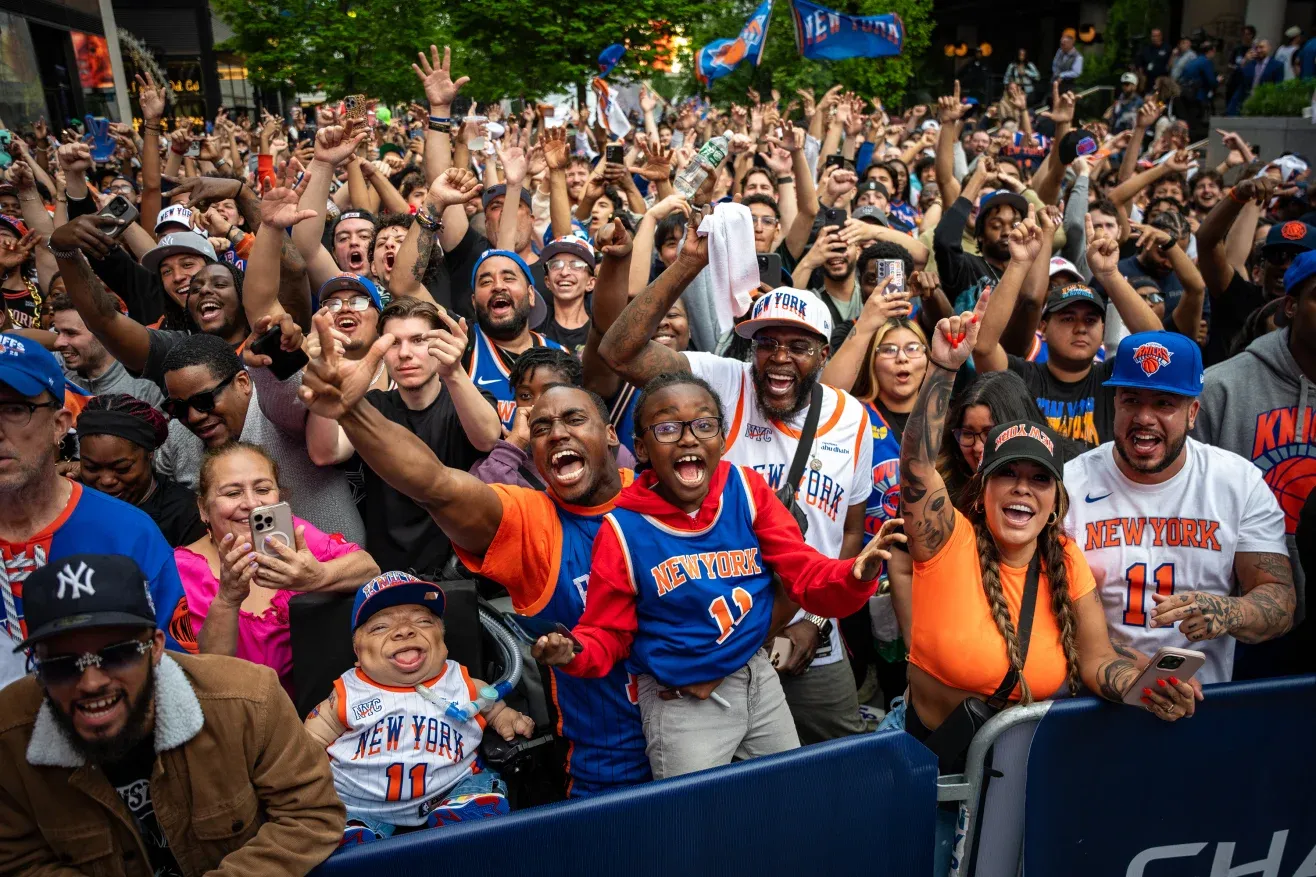
Sports, and games in general, are actually a very unique phenomenon. Humans are some of the only animals in the world that play games. As Frank Lantz, the Director of New York University’s Game Center, describes, games are like a toy version of the real world - like society, games are made up of systems; but unlike our society, games come with specific rules and boundaries everyone must follow and discrete outcomes (win/lose). We play these games to learn about ourselves and the world around us. In that context, games and sports become arenas where real-life tensions can play out on an even playing field. Old rivalries, geopolitical conflict, historical inequities - they all get projected onto a game and the players on the field to be hashed out with a type of fairness that doesn’t exist in the real world. Combine all that with a sense of nationalism, and sports like soccer become more than a game very quickly; they become a part of our sense of identity and culture. Players like Messi, Mo Salah, or Ronaldo become our gladiators who champion all our hopes on dreams on their back. As Dani Rojas says in Ted Lasso, “football is life!” And for many people, that’s true - or at least, it’s more than just a game.
In this way, sports becomes a powerful force for political organizing and we’ve seen sports be used by governments to project a certain image onto the world stage. Known as sportswashing, nations and individuals will use sports as a propaganda tool to project a more positive image of their country and distract from human rights abuses or other wrongs by hosting events or buying teams. For example:
