

There’s a disturbing pattern emerging online. You see a video of a cute puppy and rabbit that are best friends. The top comment: “Is this AI?” You see an new e-girl going viral on Instagram. “Are you AI?” You reshare a video of protestors making a fool of the police at a rally, but all the replies say, “This is AI.”
Right now we are at a critical crossroads. In just a few years since AI, or more accurately Large Language Models (LLMs), were unleashed onto the world, the majority of content online is now being created by AI. Writing, images, videos, and songs are all being generated at a terrifyingly fast pace, and the quality is only getting better and better each month making these fakes more difficult to spot. What’s more: AI is also changing how we interact with information on the internet itself. Now, when people try to look something up on Google, they just read the AI-generated summaries at the top of the page rather than looking through the search results - summaries that have no guarantee of being true, but it is certainly convenient.
The problem here is not only that AI is filling our internet with fake slop, but it’s also changing the way we **interact with information and how we determine what is real or not. The current systems and tools we have are woefully unprepared for this moment, and this is a critical issue because without objective truth the foundation of democracy itself will crumble.
So what is objective truth anyway? How have we defined it in the past, and how is it changing today? And what can we do to reclaim our right to truth?
The Roots of Objective Truth
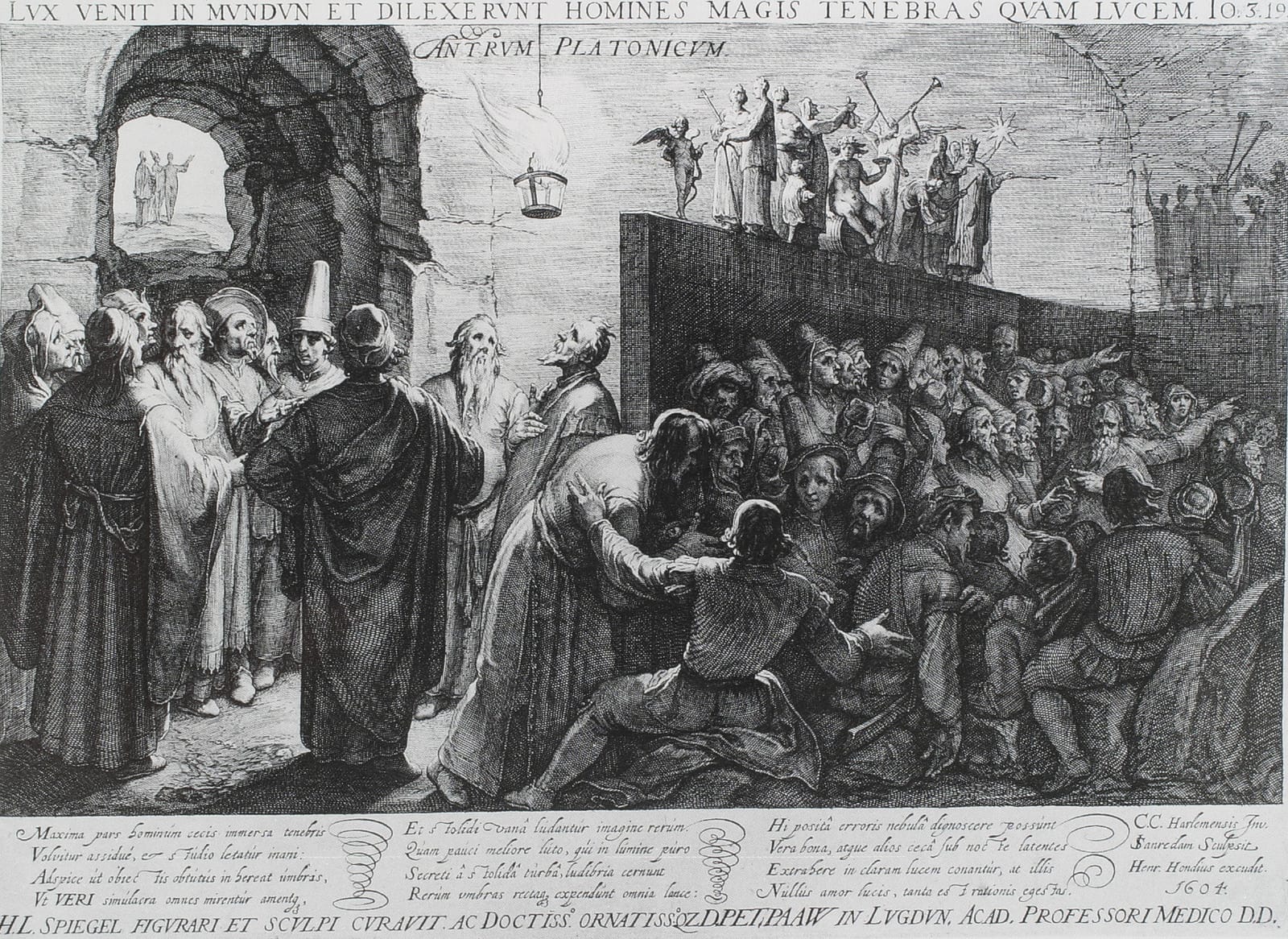
Defining “truth” is one of the longest running debates in philosophy. Plato and Aristotle argued that something was true if it corresponded to reality. Others, known as pragmatists, believe that truth is only what can withstand unlimited inquiry. There are some who believe that truth is relative depending on the context. And others who believe that the only real truth lies with God. Suffice to say, defining what truth is is a hard thing to do and it’s been a popular topic of debate for thousands of years, and the challenge of figuring out what is true knowledge and what isn’t is a major branch of philosophy called epistemology.
During the Enlightenment (1687–1789), the principle of objectivity emerged as a guiding ideal to help people land on a shared view of reality. Enlightenment thinkers championed many techniques to help individuals move past personal bias and arrive at verifiable truths about the world, such as the scientific method, observation, and peer review. This is the foundation of modern science. Journalism followed a similar path in the 1800-1900s. Professional journalism standards and practices were established like verifying sources, editorial independence, and an emphasis on factual reporting. Being an objective reporter became the gold standard for journalistic integrity.
The catch here is that objectivity doesn’t just depend on the quality of information, but also how that information is transmitted.
The Medium is the Message
Marshall McLuhan, a philosopher known as the father of media studies, said it best: “the medium is the message.” The way that information reaches us - the language, the institutions, and the technology - is just as important as the information itself. Speeches, the printing press, photography, radio, television, social media, and now AI - the technology has changed over the generations and with each advancement came new tensions that had to navigate.
